M&A and Commercial Advisory

Make better acquisitions.
Improve performance after close.

Infosly gives PE sponsors, portfolio-company CEOs, and corporate acquirers senior transaction and operating capacity when one assumption, acquisition, or execution gap can change the outcome. Steven Fox leads every engagement, from underwriting and deal execution through integration and value creation.

75+
Engagements
25+
Commercial and pricing diligences
20+
Leveraged transactions
15+
Pricing and go-to-market programs
Why Steven

Senior enough to shape the investment decision. Practical enough to own the work after it.

Investment judgment

Transaction and diligence experience from JPMorgan, Credit Suisse, Liberty Global, and BCG, applied to the live investment decision.

Operating ownership

Embedded operating roles inside PE-backed and technology businesses, including Head of Business Development at Vicarious AI through its acquisition by Alphabet.

Continuity

One senior adviser from the first question through implementation, with specialist support added only where a specific engagement needs it.

Where Steven fits

Four situations that bring sponsors and CEOs to Steven

Most engagements begin with one of these.

01
Own the acquisition pipeline

You need a senior operator to run buy-side M&A. Steven covers screening, valuation, deal modeling, diligence, negotiation, and integration planning as an embedded corporate-development lead, aimed at a pipeline that actually closes and integrates.

02
Resolve the assumption the deal turns on

One commercial assumption could decide whether you buy. Steven runs commercial and pricing diligence on market growth, customer demand, competitive position, revenue quality, and pricing headroom, and returns a clear view on whether to buy, at what price, and what has to be true for the plan to work.

03
Turn the investment thesis into growth and EBITDA

You own the business, but the thesis is not becoming growth and EBITDA. Steven translates the value-creation thesis into a small number of economically meaningful initiatives, with explicit assumptions, owners, milestones, and financial consequences, across pricing, go-to-market, sales effectiveness, operating-model change, integration, and the management cadence that turns activity into results.

04
Build AI-enabled systems the firm can keep running

You want AI to improve how the firm operates, not another round of disconnected pilots. Steven redesigns investment, reporting, and portfolio workflows around the decisions the team actually makes, and leaves an institutional-quality system with defined inputs, reusable analysis, source traceability, review controls, and clear ownership the organization can keep running.

Engagements range from rapid diligence sprints to multi-year embedded leadership roles, working as a commercial-diligence lead, interim VP of Corporate Development, Chief of Staff, integration director, or operating-diagnostic lead.

Selected proof

Proof, organized by the problem it solved

Current and confidential clients are anonymized. Estimated figures are labeled as such.

Own the pipeline

Five acquisitions closed, engagement renewed five times

The problem was not finding targets. It was underwriting and closing a multi-deal pipeline to one standard while integrating what closed.

Steven ran the full process as embedded VP of Corporate Development, from screening and modeling through negotiation, close, and post-close governance. Five deals closed over roughly two years, and the sponsor renewed the engagement five times.

5
Acquisitions closed
$5-100M
EV per deal
5x
Engagement renewed
Confidence in the case

8% of pricing headroom moved a deal from pass to close

The question was not whether the market was attractive. It was whether this business had real pricing power, which the borderline case depended on.

Steven ran willingness-to-pay research across 45+ customer interviews and translated it into revenue and margin scenarios. The 8% of headroom became a core underwriting assumption and moved the target from pass to close.

8%
Pricing headroom
45+
Customer interviews
Pass→Close
Decision moved
Model into performance

Roughly $3M of net-new ARR from pricing and packaging

The question was not how much to discount. It was whether repackaging more than 50 SKUs into three tiers could add revenue without driving churn.

Steven rebuilt pricing and packaging with discount guardrails for a PE-backed education-technology platform. It added roughly $3M of net-new ARR and 6 points of gross margin while churn held near 4%.

~$3M
Net-new ARR
+6 pts
Gross margin
~4%
Churn held
Model into performance

Roughly $7M of annualized savings from a stood-up PMO

The PMO could not just track activity. It had to show whether the initiative portfolio added up to the savings the deal was counting on.

Steven stood up a six-workstream PMO with weekly executive and board reporting for a multi-property operator, and quantified roughly $7M of annualized savings across operating model, workforce, and technology.

~$7M
Annualized savings
6
Workstreams
15+
Properties
What clients keep

The engagement ends. The system stays.

Infosly does not leave behind only a recommendation or presentation. Steven builds the models, workflows, decision rules, controls, templates, and management cadence required for the client team to continue producing high-quality work after the engagement.

01
Standardized analysis

Consistent inputs, assumptions, definitions, and quality checks replace one-off work and judgment hidden in spreadsheets.

02
Source traceability

Important conclusions remain connected to the underlying documents, data, interviews, and assumptions.

03
Review and decision controls

Human review, escalation rules, and clear accountability remain in place for consequential decisions.

04
Reusable operating cadence

Templates, ownership, and management routines allow the work to continue without depending on Steven.

How Steven works

How Steven approaches the work

01
Treat the inputs as claims, not facts.

Seller materials, management forecasts, market estimates, and AI-generated outputs are tested before they enter a decision.

02
Make every initiative earn its place.

A value-creation initiative should either contribute materially to the financial objective or remove a constraint preventing another initiative from doing so.

03
Design the system around the decision.

The workflow begins with the decision leadership must make, then defines the evidence, analysis, review, and accountability required to support it.

04
Build it so the client can keep running it.

The engagement should leave behind a repeatable system, not a process that depends on the adviser remaining in the room.

AI-enabled transformation
Two weeks three days
Quarterly investor-reporting cycle
18 workflows mapped
Approximately $5M to $8M of identified savings opportunities
Source traceability and human review retained

Senior advisory judgment, built into systems the organization can reuse.

Steven mapped 18 investment and portfolio workflows, redesigned the quarterly reporting process, and embedded source traceability and human review. The program identified approximately $5M to $8M of savings opportunities.

Parallel acquisition underwriting built around one decision standard

A standardized pre-LOI system reconciled seller data, normalized earnings and partner compensation, assessed revenue quality, and translated the analysis into valuation and consideration recommendations across more than 30 RIA and accounting-firm target evaluations.

See the case →

Private-equity AI capability built around real investment work

Steven designed role-specific workflows, training, controls, and reusable templates for research, diligence, investment analysis, board reporting, and portfolio operations, using actual private-equity decisions.

See the case →
Read our assessment of 30 M&A AI tools →
Track record

Why clients bring Steven back

The most useful signal is what clients choose to do next.

Kept on across a two-year, five-acquisition program
PE-backed B2B services platform
Renewed 5x
Selected over incumbent investment banks on a cross-border acquisition
NYSE-listed acquirer
Most new engagements arrive by referral from prior clients
Repeat and referral
Trusted to stay from transaction execution through post-close integration
Cross-border technology acquisition
Synergies ~2 mo early
Ideas

Recent writing

About

Who leads the work

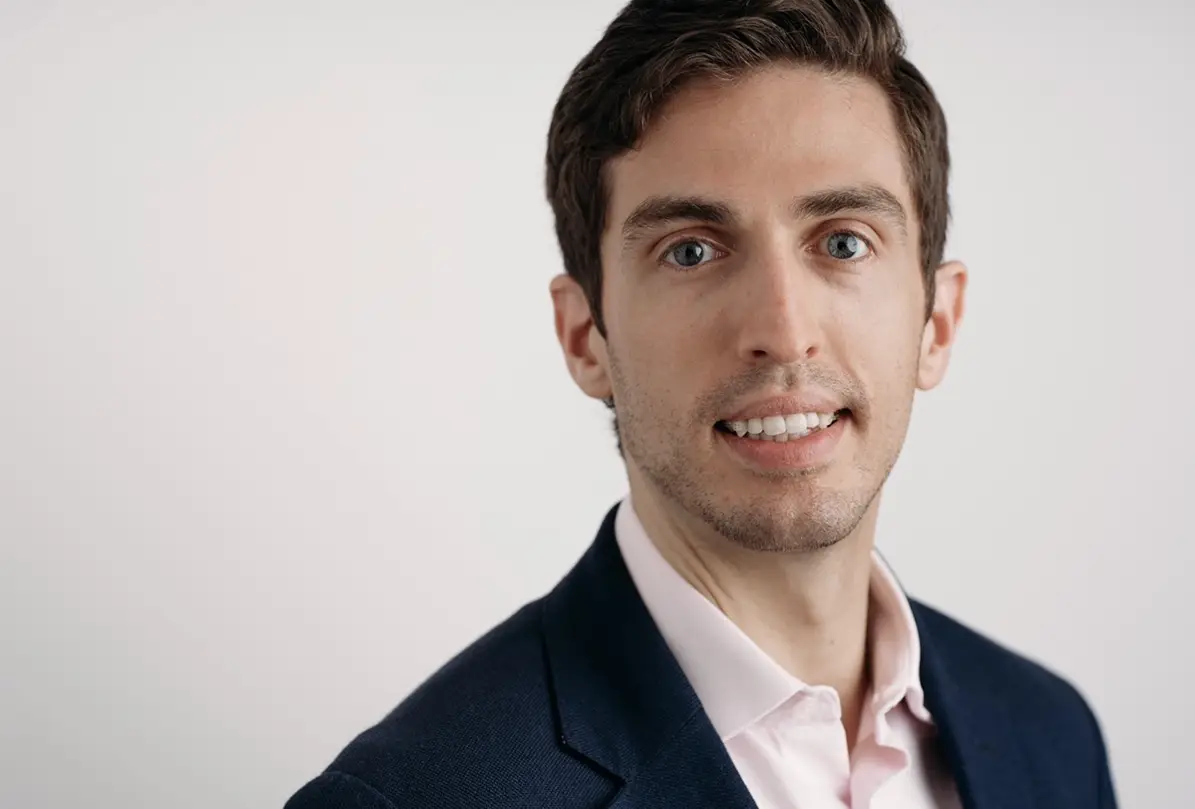
Steven Fox

Steven Fox

Founder & Principal

Steven has advised investors and acquirers, led corporate-development and integration work from inside operating companies, and served in embedded leadership roles for PE-backed businesses. His work runs the full arc of a deal, from testing the assumptions behind an investment to owning the operating plan after close.

Before founding Infosly, he worked at BCG, JPMorgan, Credit Suisse, and Liberty Global, and led business development at Vicarious AI through its acquisition by Alphabet. His transaction experience spans approximately $20B of acquisitions and financings across investment banking, corporate development, and independent advisory roles.

Steven holds an MBA from Wharton, where he was a Palmer Scholar, and an MSc in Biomedical Engineering from Oxford. He is a guest lecturer at Harvard Business School and Wharton, and teaches valuation and LBO modeling through Wall Street Prep and for technology-focused private equity funds.

Steven also leads AI-enabled operating transformations for investment and portfolio teams. He combines senior transaction and operating judgment with workflow design, analytical controls, and practical implementation, leaving clients with institutional-quality systems they can continue running after the engagement.

Every engagement is led personally by Steven. Infosly is deliberately a single-principal, senior practice, with specialist support brought in for a given engagement only when the work calls for it. The person who scopes your deal is the person who does it.

BCGJPMorgan M&ACredit SuisseLiberty GlobalVicarious AI (acq. by Alphabet)Wharton (Palmer Scholar)OxfordHBS Guest Lecturer
Contact

Evaluating an acquisition, or planning what comes after one?

Tell Steven the decision you are facing. A first conversation is 30 minutes, and you will leave knowing whether it fits his experience and what a practical next step could look like.

A first conversation is 30 minutes. Steven will ask about the situation, share the most relevant experience, and be straight about whether he can help.